What Carfax actually is
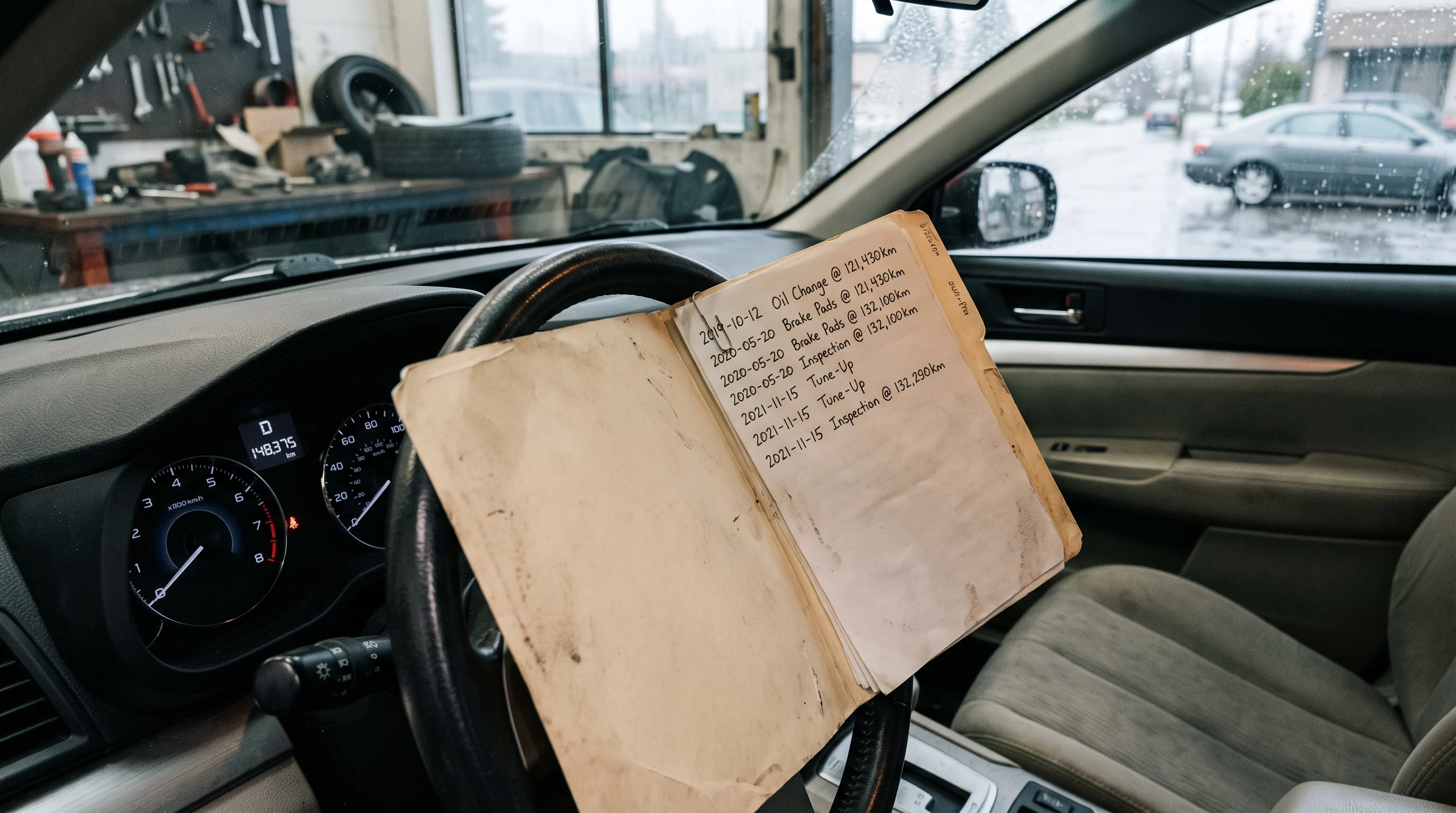
Carfax Canada is a vehicle history reporting service. You enter a Vehicle Identification Number (VIN), pay for a report, and Carfax pulls together data from insurance claims, provincial registries, service records, and other sources to tell you the car's history: reported accidents, total-loss designations, number of previous owners, lien status, registration timeline, odometer readings, and sometimes service records if the shop reports to Carfax.
The purpose of a Carfax report is due diligence when buying a used car. It helps you avoid vehicles with hidden damage, odometer rollbacks, outstanding liens, or sketchy ownership patterns. A clean Carfax report doesn't guarantee a car is perfect, but a report showing multiple accidents or a salvage title is a red flag worth investigating or walking away from.
Carfax does not assign a dollar value to the vehicle. The report is historical information, not a price estimate. It tells you what happened to the car, not what the car is worth today. If you're looking for pricing, Carfax won't help — you need a different tool.
Why people search for 'Carfax car value' (and why it's not a thing)
The confusion comes from Carfax's brand association with used-car transparency. When people are researching a used vehicle, they hear 'always check the Carfax' and assume Carfax provides everything you need — including a price estimate or market value. In reality, Carfax only provides history. It doesn't price vehicles.
Carfax Canada does integrate with some listing platforms (like AutoTrader) to display Carfax badges on listings, which signals that a history report is available for that vehicle. This association makes it seem like Carfax is part of the pricing or valuation ecosystem, but the badge is just a marketing partnership — it doesn't mean Carfax sets or validates the asking price.
The term 'Carfax value' likely also arises because US Carfax briefly experimented with value estimates years ago, but that was never a core product, and it's not available in Canada. If you see a 'Carfax value' reference online, it's either outdated US information or someone misusing the term. In Canada, Carfax does history reports. Period.
When a Carfax report is useful (and when it affects value indirectly)
A Carfax report is essential due diligence when buying any used car from a private seller or dealer. If the report shows accident history, you'll know to get a pre-purchase inspection and negotiate the price down (or walk away). If the report shows a lien, you'll know not to buy the car until the lien is cleared. If the report shows the odometer rolled back, you've just saved yourself from a fraud.
Carfax history affects a vehicle's value indirectly: a clean report supports the asking price; a report showing accidents or a salvage title lowers the market value because buyers know the car has damage history. Dealers and private sellers with clean Carfax reports often advertise that fact because it justifies their asking price. A car with a clean history is worth more than an identical car with accident history — but Carfax doesn't calculate that difference; the market does.
For ICBC total-loss disputes or BC PST reduction purposes, a Carfax report showing prior damage can support your case that the vehicle is worth less than the Canadian Black Book average. ICBC and BC tax authorities won't accept a Carfax report as a valuation, but they will consider it as evidence of condition when you're arguing that the book value doesn't apply to your specific vehicle. You'll still need a formal appraisal (FIN-320 for PST), but Carfax can be part of the supporting documentation.
Where to actually get car value data in Canada
For professional industry valuations, Canadian Black Book (CBB) is the standard. Dealers, lenders, ICBC, and BC's PST system all reference Canadian Black Book figures when they need a baseline vehicle value. CBB is subscription-based, so you likely won't access it directly unless you pay for a report or ask a dealer or ICBC adjuster for the number.
For realistic market pricing when buying or selling privately, check current AutoTrader and Facebook Marketplace listings for the same year, make, model, and mileage in your region. Those are real asking prices from actual sellers right now — not statistical averages, not historical data, but live market comps. You can also use a free market estimate tool to pull this data automatically and see low, mid, and high asking prices from private sellers and dealers.
For formal valuations required by ICBC, BC tax authorities, or legal proceedings, you'll need a certified appraisal from a qualified appraiser — often on a government form like the FIN-320. A Carfax report is not a valuation and cannot substitute for an appraisal. But it's a useful piece of evidence about the vehicle's history when you're building a case that the car is worth more or less than a generic book value.
Carfax Canada vs US Carfax: does the US version do pricing?
US Carfax experimented with a 'Carfax History-Based Value' tool that estimated a vehicle's value adjusted for its accident history, but this was never a primary Carfax product and isn't offered in Canada. Even in the US, it's not widely used or trusted compared to Kelley Blue Book, Edmunds, or NADA guides. Carfax's core business — in both countries — is vehicle history reporting, not pricing.
If you see references to 'Carfax value' online, they're likely based on outdated US information or confusion between history and valuation. In Canada, no such Carfax valuation service exists. Canadians use Canadian Black Book for book values and current listings for market comps. Carfax is for history checks only.
The takeaway: don't search for 'Carfax value' in Canada. Search for 'Canadian Black Book value' if you need the industry book figure, or check AutoTrader listings if you need real-world asking prices. And always get a Carfax report (or a similar service like CarProof) when buying a used car — but understand it's telling you the car's past, not its price.
FAQs
Does Carfax provide car values or pricing?
No. Carfax Canada is a vehicle history reporting service. It tells you accident history, ownership records, lien status, and service history — but it does not provide price estimates or market valuations. For car values, use Canadian Black Book, current AutoTrader listings, or a free market estimate tool.
What is a Carfax report?
A Carfax report is a vehicle history document you purchase by entering a VIN. It shows reported accidents, total-loss designations, number of owners, registration timeline, odometer readings, lien status, and sometimes service records. It helps you avoid buying a car with hidden damage or fraud.
Can I use Carfax to price my car for sale?
No. Carfax doesn't price vehicles. To price a car for private sale, check current AutoTrader and Facebook Marketplace listings for the same year, make, model, and mileage. Those are your real comps. A clean Carfax report supports your asking price, but the report itself doesn't set the price.
Does a clean Carfax mean the car is worth more?
Yes, indirectly. A clean Carfax report (no accidents, no liens, normal ownership) makes the car more desirable and supports a higher asking price. A report showing accidents or a salvage title lowers the market value. But Carfax doesn't calculate the price difference — the market does.
Will ICBC or BC tax authorities accept a Carfax report as a valuation?
No. ICBC and BC's PST system require Canadian Black Book figures or a certified appraisal (FIN-320 for tax purposes). A Carfax report is not a valuation. However, if the Carfax shows prior damage or a salvage history, it can support your argument that the book value doesn't apply to your car — but you'll still need a formal appraisal to lower the taxable value or ICBC offer.
What's the difference between Carfax and Canadian Black Book?
Carfax reports vehicle history (accidents, ownership, liens). Canadian Black Book publishes vehicle price valuations (wholesale, average, retail) used by dealers, lenders, and ICBC. They serve completely different purposes. You need both when buying a used car: Carfax for history due diligence, and Black Book or market comps for pricing.
Informational only, not legal or consumer advice. Car Appraisal BC is not affiliated with Carfax, Canadian Black Book, or any vehicle history or valuation service. Always obtain a vehicle history report before purchasing a used vehicle. Pricing and tax valuation rules can change; confirm current requirements at gov.bc.ca.