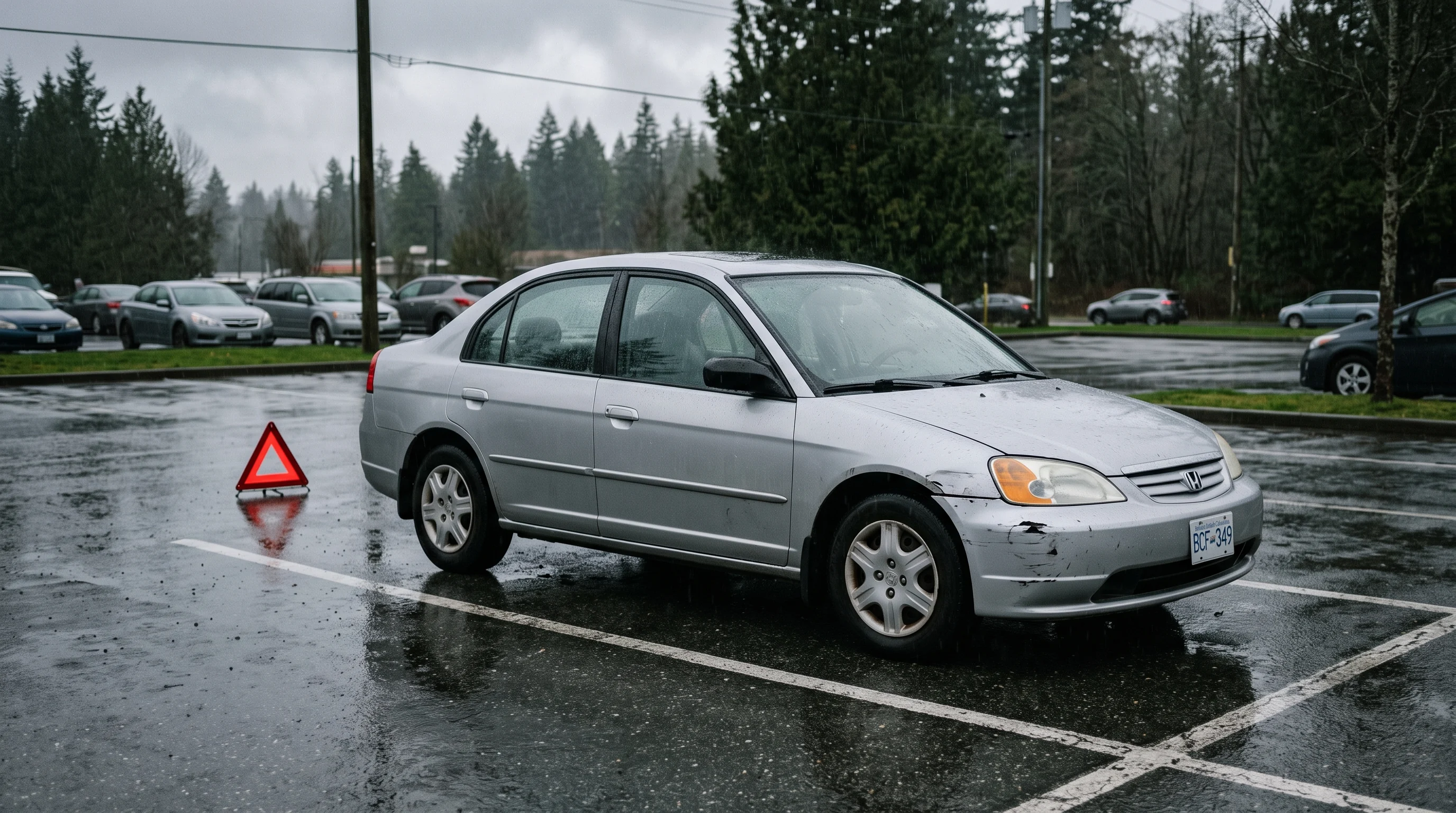
What ICBC means by Actual Cash Value (ACV)
Actual Cash Value is your vehicle's fair market value immediately before the accident, accounting for depreciation, condition, and mileage. It's not what you paid, not what you owe on a loan, and not what a brand-new replacement costs. ACV is the used-market price a willing buyer would pay a willing seller for your exact year, make, model, trim, and condition in BC's current market.
ICBC uses ACV because their obligation under BC's no-fault insurance system is to make you whole by paying what you lost — and what you lost is the market value of a used vehicle, not the cost of a new one. If your 2017 Honda CR-V was worth $19,000 before the crash, that's what ICBC owes you (minus your deductible and any salvage value if you keep the wreck). The fight is always about that $19,000 number: how it was calculated and whether it's accurate.
How ICBC calculates the value: Black Book, adjustments, and assumptions
The adjuster starts by pulling your vehicle's Canadian Black Book valuation for the year, make, and model. Black Book publishes average wholesale, average, and retail values based on national transaction data. ICBC typically uses the average or wholesale figure as a baseline, not the higher retail number.
From that baseline, the adjuster makes adjustments: mileage (higher km lowers value, lower km raises it), trim and options (AWD, leather, tow package, premium audio), and condition (clean vs. prior damage, service history, cosmetic wear). These adjustments are supposed to bring the generic Black Book average closer to your specific vehicle's real worth.
The problem is that adjusters work from assumptions unless you provide evidence. If you don't supply service records, photos, or proof of recent work (new tires, brakes, timing belt), the adjuster assumes average condition. If your vehicle had premium options or was in excellent shape, an average-based number will understate it. The burden is on you to prove your car was above average — ICBC won't assume it.
Why ICBC's first car value offer is often low
Averages blend clean, well-kept vehicles with rough ones. Black Book values mix high-mileage, neglected examples with pristine, low-mileage cars. If yours had 60,000 km when the average is 120,000, or you just replaced the suspension and tires, the book value won't capture that premium unless the adjuster adjusts for it — and they won't adjust unless you make them.
Condition is assumed, not proven. Unless you bring receipts, photos, and service history, the adjuster defaults to 'average condition.' That means normal wear, no recent major work, and nothing special. If your vehicle was actually cleaner, better-maintained, or had recent upgrades, you're leaving money on the table by not documenting it.
Local market reality gets flattened. Canadian Black Book is a national average. BC's used-car market — especially in Metro Vancouver, the Interior, and Vancouver Island — can run higher than the national figure for in-demand models. What it actually costs to buy the same vehicle from a BC dealer or private seller today may be $2,000-$4,000 above the book number ICBC starts from.
Trim and options get simplified. The difference between a base model and a fully-loaded one can be $5,000+, but if the adjuster doesn't verify your exact trim and options, they may value it as a mid-level or base. Leather seats, sunroof, navigation, premium sound, and factory tow packages all add value — but only if you prove they were on your car.
Your right to dispute the ICBC car value offer
The first offer is a starting point, not a final decision. You can ask the adjuster, in writing, how the value was calculated: which Black Book figure was used, what mileage and trim were assumed, and what condition adjustments were made. Get the breakdown. If the inputs are wrong (wrong trim, wrong mileage, wrong assumption about condition), point that out and ask for a correction.
Gather evidence to support a higher value. Pull current AutoTrader and Facebook Marketplace listings for the same year, make, model, trim, and mileage in BC. Print or save the listings with asking prices and mileage. Collect your service records, receipts for recent work (tires, brakes, timing belt, battery for hybrids), and photos showing your vehicle's condition before the accident. This evidence shows ICBC that your car was worth more than the generic average.
If ICBC still won't budge, get an independent appraisal. A written valuation from a third-party appraiser who inspects comparable market sales and documents your vehicle's condition carries weight in negotiation and arbitration. It's not a guarantee ICBC will pay the appraised amount, but it creates a defensible counter-number and shows you're serious about disputing the offer.
Escalate if needed. If you can't reach agreement, you can request a review within ICBC, and there are formal dispute resolution processes including arbitration. A documented independent appraisal is one of the strongest pieces of evidence you can bring to any of these steps.
When to get an independent car value estimate or appraisal
Start with a free market estimate to see where ICBC's offer sits relative to current BC listings. If comparable vehicles are listed for $3,000-$5,000 more than ICBC offered, you know there's a gap worth investigating. A free estimate isn't something you'd submit to ICBC as evidence, but it tells you whether the fight is worth having.
If the gap is meaningful (over $2,000-$3,000) and your vehicle genuinely was above average — low mileage, excellent condition, premium trim, recent major work — consider a formal independent appraisal. The appraisal documents those specifics in writing, assigns a defensible value, and gives the adjuster a concrete number to respond to rather than a verbal disagreement.
The cost of an appraisal (typically $150-$300) is worth it when the potential gain is larger. If ICBC offered $16,000 and a realistic BC market value is $20,000, a $200 appraisal that helps you recover even $2,000 more is a strong return. If the gap is only $1,000 and your vehicle was fairly average, the appraisal cost may not pencil out.
FAQs
How does ICBC determine car value?
ICBC calculates Actual Cash Value (ACV) by starting from Canadian Black Book average or wholesale figures for your vehicle's year, make, and model, then adjusting for mileage, trim, options, and condition. The result is supposed to reflect what your vehicle was worth in BC's market immediately before the accident.
What is ICBC Black Book value?
Canadian Black Book is a national vehicle valuation guide that ICBC uses as a baseline when determining total-loss payouts. It provides average wholesale, average, and retail values. ICBC adjusters reference these figures, then adjust for your vehicle's specifics. The Black Book number is a starting point, not the final offer.
Why is ICBC's car value offer lower than I expected?
First offers often rely on national average book values that don't reflect BC's higher local market or your vehicle's above-average condition. Unless you provide service records, recent work receipts, and proof of options, the adjuster assumes average condition and a mid-range trim. That generic assumption can understate a well-kept or low-mileage vehicle by thousands.
Can I dispute ICBC's car value?
Yes. Ask for the written calculation, supply comparable BC listings and proof of your vehicle's condition and options, and negotiate. If you can't agree, you can request an internal review and use formal dispute channels. An independent appraisal strengthens your case.
Does an independent appraisal help with an ICBC car value dispute?
It can. A written, third-party appraisal documents your vehicle's actual condition, mileage, options, and comparable BC market values, giving the adjuster a concrete, defensible number to respond to. It's stronger evidence than verbal disagreement or casual estimates.
Is a free estimate enough to dispute ICBC's offer?
A free market estimate (checking current AutoTrader listings) is useful for understanding whether there's a gap, but ICBC won't accept an online estimate as formal evidence. Use it to decide whether to fight, then gather listings, receipts, and possibly a formal appraisal if the gap is large.
Informational only — not insurance or legal advice, and not an ICBC determination. We are an independent information resource, not affiliated with ICBC. Total-loss outcomes depend on your specific vehicle, policy, and claim details; confirm current ICBC processes at icbc.com.